Friday, June 2, 2017

Letter to a Future Biology Student

      My name is Eman Ahmad. I am a freshman and I started the year at 14 years old. I went to Redwood Middle School, so I have been in the district since the beginning of middle school. I came into the school year being very interested in biology, specifically anatomy, and math. This year I took all the basic classes (math, bio, Pe, English etc.) and Spanish 2 and drama. Science has always been my favorite academic subject, but my favorite class and activity is drama. I enjoy acting and performing and I would like to pursue that when I grow older. When I came into high school I was a bit nervous, but I soon realized that there was really nothing for me to worry about. 

      Mr. Orre's class is a flipped classroom, meaning we learn at home and we discuss in class. Almost all of the work we do is in our notebooks, which is the most important supply in this class. A huge part of this class is also your blog, which is where you write all you labs and other assignments. When you first come to class you look at the agenda and do the do now. Afterwords, we usually discuss the vodcasts and then spend the rest of the time working on labs, blog posts, or other activities. All the labs we do are very unique, but we write our lab conclusions in our blogs. Our daily homework is always vodcasts and the occasional textbook notes, and these are all done in our notebooks. The homework takes about 15-30 minutes depending on how long the vodcast is. In our notebook, we do all of our vodcasts, textbook notes, and do nows. We keep this organized with a table of contents. Our blog is where we do all of our lab write ups and reflections. At the beginning of the year I wasn't really sure how to write in my blog, but now I have the hang of it. My personal favorite blog post was my Unit 9 Reflection. In this class we have no quizzes, just tests after every unit. They are usually 50 multiple choice questions about the vodcasts and CFUs (the short quizzes that don't count for a grade that we take after the vodcasts). Over the course of the year I have become way more confident in the daily routine of the class. I advise that you talk to Mr. Orre if you ever have a question because it's a way of solving your problems easily and proving that you're responsible and that you actually value the learning experience.

       Mr. Orre has a few pet peeves, so here's some advice: 

  • Never put your chairs up before the bell rings.
  • Don't talk when he is talking
  • Clean up VERY WELL after a lab 
It is not hard to earn good grades on assignments as long as you actually try and put in effort. The homework and daily assignments are weighted 35% so it is very important that you do it. In order to receive a good grade on a test you have to study in advance and not just the night before. It is also important that you actually pay attention and try to learn during vodcasts and not just watch them for the sake of getting points. Asking questions is also very helpful in this class. This year these are 3 mistakes that I made:
  • I usually procrastinated when studying, and even though I still usually got good test scores, it was more stressful than studying in advance. 
  • My method of studying at the beginning of the year was just to read over my notes. It's way more helpful to study actively (ex. quizzing yourself)
  • I did not use my class time to the best of my ability, and I ended up doing more work at home that I could have avoided. 
By being aware of these mistakes, I was really able to succeed in this class.

      Overall, I really enjoyed this class more that I had expected. I wasn't sure that the flipped classroom would really work for me, but I actually really enjoyed it. I learned a lot and this was one of my more fun classes (especially because of the labs). Next year in terms of science I will be taking Chemistry honors, because I ended with a very good grade in this class and I really enjoy science. Always do your work and take the above advice and you should really enjoy the class.

-Eman Ahmad

Wednesday, May 31, 2017

Pig Dissection

      I think that the purpose of this lab was to see in internal anatomy to see how the systems and anatomy that we learned about in this unit look in real life.  The pig's internal anatomy is essentially the same as a human's so during the dissection we could see all the organs that we learned about, and it really helped visualize how the systems actually look like in our bodies. We were able spend time looking at each system My favorite part of the dissection was seeing the difference between the abdominal and thoracic cavities. In the abdominal cavity, all of the organs looked very interesting and unique, and in the thoracic I was especially fascinated by how the lungs looked. The organs in each cavity were very different and it was interesting to see the contrast. I thought that this dissection was a very valuable experience. It was a way for me to actually appreciate what's inside of my own body, and it was an experience that I won't get very often. Although I have done many dissections in the past, I look forward to doing a lot more in the future. 

I was not able to embed the videos, but here are the links:
Video Tutorial: https://www.youtube.com/watch?v=8lWrsM2a2Ls&list=UU4c9SscfUCFA1NHkgEAr8zg&index=1

A fun vlog we made on the first day of the dissection: https://www.youtube.com/watch?v=aW1REKnDW6E&index=2&list=UU4c9SscfUCFA1NHkgEAr8zg

Monday, May 22, 2017

20 Time Reflection

      For my 20 time project, I worked with Monica, and we went vegetarian and vegan for a month. I did this because I wanted to see how different diets would affect my body, and to also test my discipline. I was also aware of the health benefits of these diets and I was also concerned about the amount of animals being tortured and killed for food. I was focused on self-improvement and acknowledging where our food comes from.

      Our initial plan was to go pescatarian for a week, vegetarian for a week, and then vegan for the last week. We decided that one week was not enough time to see the effects of the diets, so we cut out the pescatarian part and extended vegetarian and vegan for two weeks each. 

      I personally though that it went really well. It was very difficult to keep my discipline and avoid the foods that I wasn't supposed to eat, but I was able to do it. We were also able to regularly update our blog, and I was able to measure both of our blood pressures and heart rates every other day. 

      I learned how to come up and coordinate an organized schedule with my partner. My time management with projects is usually not exceptional with projects, but this time we worked efficiently and got done quick. The only exception was with the video, which we started a bit late, so it was slightly rushed. If I had the chance to do this project again, I would have extended the amount of time we did the diets for, so that way I could really test the extent of my discipline. I learned that I have a lot of self control when I am focused and willing.

      In the future I may try this again, specifically for a longer period of time, but I want to encourage other people to try it, as if one person cuts meat out of their diet, it won't make a huge difference on the amount of animals getting slaughtered, but if a lot of people do, there is a chance for change. 

Wednesday, May 10, 2017

Unit 9 Reflection

      This unit was about taxonomy and classification. We learned how different organisms are classified through the system: Domain, kingdom, phylum, class, order, family, genus, species. After learning about history of taxonomy, we went into details about kingdoms within the three domain, especially bacteria and eukarya. After learning about each domain, we learned about a lot of phyla within each domain and kingdom, especially within eukarya and animalia. Throughout this unit we saw how evolution plays a big part in relationships between different phyla and classes. I would still like to learn about archaea, as we have not really talked about that domain.
Picture of different organisms

      This unit we did a "What on Earth Evolved Presentation". Overall I learned a lot from not only doing my presentation, but also from watching my classmates' presentations. I did my presentation on the extinct organism, the trilobite. I think my presentation went pretty well, but the one thing I would have changed is how prepared I was. I was planning on having my presentation memorized, but I did not end up having enough time to practice a lot, so I would have allowed myself more time to do that. During this project, I learned that practice is very important, no matter how confident you are.
Image result for taxonomy
https://commons.wikimedia.org/wiki/File:Taxonomic_Rank_Graph.svg
                                                    
      In my unit 8 reflection, I stated how I want to be more assertive. I think that I have been doing a better job doing that in spite of the fact that that there was not too much time for group collaboration during this unit.


Thursday, April 20, 2017

Geologic Timeline


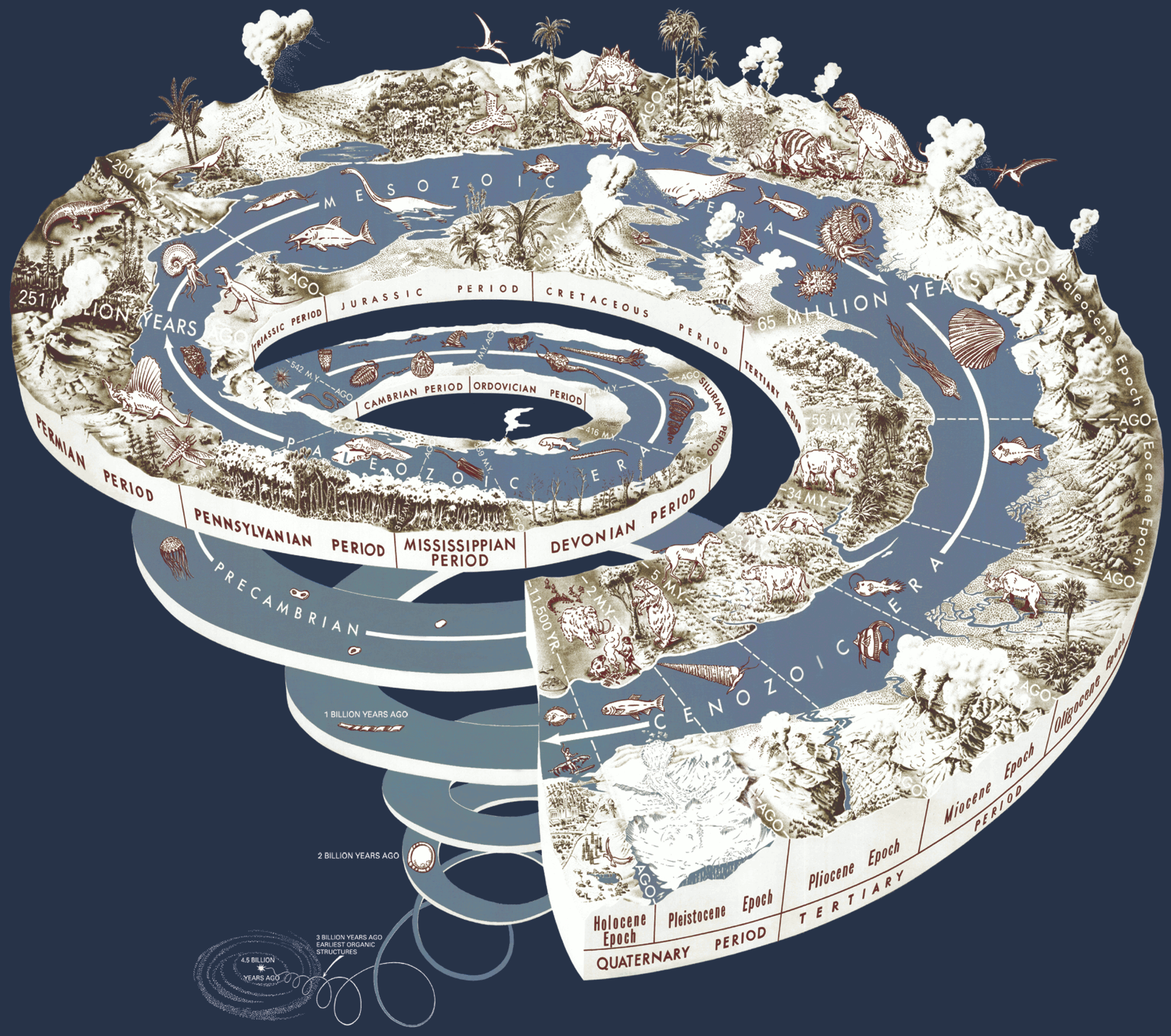
      Three very important events in earth's history were the first prokaryotes, the Cambrian explosion, and the Permian-Triassic Extinction. Prokaryotes were the first life forms on earth, so I believe that the creation of the first prokaryotes was extremely significant, as they paved the way for life on earth. If they have never been created, life on earth may not exist now or be as diverse as it is. The Cambrian explosion was radiation of a lot of species, and when a lot of complex fossils began to appear. This event was very a very important evolutionary event, and may have paved they way for many species we have now. Although the Permian-Triassic extinction was the largest mass extinction in history, it paved the way for a lot of new species. These species include dinosaurs, which are a very unique and valued part of earth's history.

      Earth was formed about 4.6 billion years ago, but it was just fire and no life. The simplest life appeared about 4 billion years ago and complex life forms only began to become more common about 542 million years ago. I was surprised by how large the amount of time was that we had no life or only prokaryotic cells. More complex life and life that we are more familiar with only showed up towards the end of the scale. 

Image result for earth's history
      Even though humans have not been around for a long time, I believe that we have had a huge impact. We have changed the environment fundamentally by deforestation, pollution, etc. We have also affected not only the earth itself, but everything that lives on it as well. However I believe that when the human race is no longer dominant, our impacts may not have effects effects on the life then. I wonder what the future looks like for the earth. Was life before the humans really what we have estimated it to be like, or was it completely different?

Monday, April 10, 2017

Unit 8 Reflection

      This unit was all about constant change. We learned that population are always evolving and there are many different factors that can cause this. Darwin was a very important scientist, who made significant conclusions about natural selection. He also discovered that natural selection is the cause of evolution. The hunger games lab was a very hands on lab that was able to help illustrate the concept of natural selection. We learned about the different pieces of evidence for evolution, like fossils and homologous structures, and how there are other factors and selection that can lead to evolution, such as genetic drift and directional selection. Lastly, we looked at the big picture by learning about earth's timeline and how earth formed, which gave us a scale on which all the previous topics have happened. 


       In the future, I would like to learn more about the evolution of different specific species. I especially want to learn more about the evolution of the human species, and the evolution of human populations in the area where I live, or in different countries. I wonder what species and populations have been evolving in the area where I live, as there is a lot of different animals that live near me. 

      In order to be assertive, I have been trying to reinforce in my head what it is that I really want or want to ask for. I need to work on my confidence when asking or saying something, as I am sometimes scared that I might offend someone or my words may be taken the wrong way.

Monday, April 3, 2017

Hunger Games Final Analysis

1. In this lab, we divided the class into three different variants of a species and competed for food and survival. This lab simulated how natural selection can cause evolution in a population.

2. The "Pincher" phenotype was the best at capturing food because it was quickest to pick up the corks with two fingers compared to between your wrists and knuckles. That is the the most natural way for us to pick up objects, which is why it was more effective than the other two phenotypes.

3. In this lab we asked the question: Do populations evolve? I found that the population did evolve, as both the allele frequency and amount of each phenotype has changed. All the phenotypes started with 10 individuals, but by the end there was only 1 stumpy, 14 knucklers, and 6 pinchers. The frequency of the "A" allele has decreased while the "a" allele has increased. This is because the pinchers (aa) have been able to reproduce significantly more than the stumpies (AA), resulting in the "a" becoming more common.

4. The flipping of the coins to simulate sex was random, and the distribution of the food was random, except for when it was in one big pile. Our mates were not random, as we got to choose who to mate with. The non random mating could affect the population, as if you mate with someone with the same genotype as you, your offspring may be more likely to look like the parents. When the food was all in one pile, there was more competition, whereas when it was randomly distributed, everyone was in their own space.

5. If the food had been larger, the population would look more like the stumpies, as it is easier to pick up big pieces of food between the wrists, but the knucklers would not have thrived because it is very difficult to pick up large objects between the knuckles. If the food had been smaller, the population would look more like the pinchers, as it is easy to pick up small objects with your fingers, however there would be few stumpies.

6. If there were no imcomplete dominance there would be no knucklers as they are the result of the heterozygous genotype. Although the genotype for a pincher is homozygous recessive, I believe that pinchers would become more common as they are significantly more efficient at picking up food than the stumpies.

7. Natural selection is a cause of evolution. Over time natural selection can lead to a change in allele frequency in a population, which is considered evolution.

8. Some individuals were more aggressive than other individuals. In real life, this resembles competition and the fight to survive. I even saw some individuals use their phenotype improperly. For example, I saw some stumpies using their hands to scoop up food as well. This can lead to an inaccurate measurement of allele frequency.

9. In evolution, populations evolve due to natural selection. Natural selection acts on phenotypes rather than gentoypes, because factors in the environment only are exposed to the physical traits of the individuals rather than their genes.

10. I wonder how natural selection has affected populations in the area where I live. Has there been a lot of evolution recently?

Thursday, March 9, 2017

Unit 7 Reflection

       This unit was all about ecology and conservation biology. We learned about the different components of an ecosystem, like abiotic and biotic factors. We also learning about different factors that affect how much and ecosytem can hold, like carrying capacity and population density. Perhaps most importantly, we learned about healthy ecosystems, and ways we can keep them healthy. Healthy ecosystems have high biodiversity, and how people can protect ecosystems by methods like protecting biodiversity hot spots and restoration. I learned that humans are causing a lot of harm and are pushing a lot of species towards extinction because we are getting rid of their habitats and are contributing to climate change, which can be very harmful to many different species.

      After watching the movie Bag It!, which showed the negative effects of using plastic, I started wondering what other activities or goods do I use on a daily basis that could potentially be harmful to the environment. If we keep consuming at the rate that we are in the US, how long will all the natural resources last before we start to get limited?

       Overall, the Conservation Biologist project went very well. All of the members of my group contributed, which usually does not end up happening when I do group project. We managed to finish our research and make the slide presentation quickly, and fairly effortlessly. The only problem we had was that we first recorded our presentation in separate videos, but after realizing it was not possible to edit them together, we had to rerecord it in one take. In my New Years Goals blog post, I mentioned how I wanted to get as much work done in school as possible so I would not have to worry at home. That was true of this project, as I only had to spend about 10 minutes at home. Through this project I also learned that there is an enormous variety of threats to different ecosystems, some of which you would not expect to be a threat.

      According to the self assessment we took, my highest total was for assertive, so I would like to keep this up in the future. I just need to work on being able to ask for help more easily.

Tuesday, January 31, 2017

Unit 6 Reflection

        Unit 6 was all about the different aspects of biotech, including bioethics, what biotech is used for, and the technologies and equipment that are used in the field of biotech. Biotech involves using microorganisms to benefit humans. Genetic engineering is also a huge part of biotech. There are 4 main applications of biotechnology. For example, one application is agricultural, which would include things like genetically modified crops. Bioethics is also a part of biotechnology. Bioethics is determining what uses of the technology is moral or correct.

      This unit was generally easy for me to understand. The only concept that was slightly more confusing for me was recombinant DNA, but after going through it, I started to grasp the concept more. I think the labs we did this unit were much more successful and clean than the labs that we did last semester.
   
      For this unit, we did two labs in class and a virtual lab online. The virtual lab taught us about the process of gel electrophoresis, which we then did as an actual lab with the candy electrophoresis lab where we separated different candy dyes by size. The other lab we did was the pGLO lab. In this lab we transformed bacteria using a plasmid called pGLO, and we were able to grow bacteria that glowed under a blacklight. From the labs I learned that although the concepts and processes we learned in the vodcast may seem complicated, but they are not very difficult to execute even in a classroom setting.

       I am interested in learning about how the technologies we learned about are being used currently. I also would like to learn about what other technologies exist besides the ones that we learned about during this unit. 

      In my new years goals post I mentioned that I wanted to try and actually understand the topics we learn rather than blindly memorize them. I think I practiced that a lot during this unit, especially when learning about bioethics and having the world cafe discussions in class, as I actually formed opinions for myself, and the labs also really helped me understand the topics.

Saturday, January 28, 2017

pGLO Lab

      Our transformed bacteria (with the pGLO plasmid) have resistance to the antibiotic ampicillin, and can glow under a UV light with the presence of arabinose. In the 100 uL of bacteria we used to spread on each plate, I estimate that there is a large number of individual bacteria like 50 million or even more. Since bacteria are very small and microscopic, a lot can fit into a very small amount of space. The arabinose in the plates acts as a trigger for the plasmid. According to the vodcast, the presence of arabinose triggers the GFP in the plasmid that makes the bacteria glow. 
      The protein GFP has many used and applications in applied science and research, and these are three according to livescience.com and addgene.org. The glowing protein can be used to track cells like cancer cells. It can also be used to track the spread and progress of an HIV infection. It can also be used to monitor gene expression, if it is put under the control of a specific promoter. Another application of genetic engineering is in the agriculture and food industry. Many of the foods we eat are genetically modified (GMO). For example, crops such as corn can be modified to be resistant to pests or diseases that usually affect the crops. 


Thursday, January 19, 2017

Candy Electrophoresis Lab

      When we analyzed the results of our gel, there were a few minor differences between our dyes and the reference dyes. The reference dyes generally stayed in one clump and stayed in the same shape. Our own dyes dispersed and spread out a little bit more. Our red and yellow dye even left a bit of a trail as it moved forwards. None of the dyes moved in the wrong direction however, so I believe that they are all negatively charged.

      Out of the 4 dye structures that were pictured, I believe that Fast Green FCF is most similar to the dyes we examined in class. It seem to be negatively charged, as were the dyes we used in class, and all the rest of the dye structures pictured are not negatively charged.

       I believe that dog food manufactures put artificial food colors in dog foods as a marketing strategy. Since the owners want the best food for their dogs, they will most likely choose a dog food that looks more appealing, and one that has nice colors in it would look much better than the natural color of the food. Also in my own diet, I think a lot of the food that I eat has artificial food dye in it. I enjoy eating candy which usually has dye in it, and the snacks I sometimes eat, like chips, also are colored artificially.

      The distance that the dye traveled was controlled by different factors. The main factor is the size of the dye molecules and fragments. The smaller the size, the faster and farther the dye would go. The amount of time also contributed to how far the dye went. If we had left the electrophoresis machine on for longer, the dye would have traveled further. The electrical current flowing from negative to positive helped the dyes moved through the gel. The small holes in the electrophoresis gel allowed the dye to separate by size. The bigger the molecule, the longer it will take to get through the holes, which is why smaller molecules get through the gel faster.


      If we had DNA with molecular weights of 600, 1000, 2000, and 5000 daltons, I would expect the 600 and the 1000 molecules to go much further than the 2000, and especially the 5000. Because they have smaller weights, they can get through the gel much faster than the molecules with larger weights. 

Tuesday, January 10, 2017

New Years Goals

      This semester, I have the goal to get more sleep to help me perform better during the school day. I will do as much homework as possible during tutorial and lunch during the school day, so I will have less to do when I get home. I will also avoid procrastinating until the last minute, to save me more time in the long run. I will also limit the distractions I get while doing my homework,which are quite frequent, like putting my phone somewhere else so I am not tempted by text messages and social media notifications. I believe that if I do these things, I will wake up in the morning feeling more ready and have enough energy to focus at school. 

     In this class, I have the goal of learning and absorbing the information rather than just memorizing facts. I will do this by asking more questions to try and grasp concepts that I'm confused about. I will also listen more and think more during the vodcast rather than just trying to fill in the notes and. I will also devote more time to studying (not just before a test) as I usually take minimal time to study. I believe that if I achieve this goal, I will perform better on tests and quizzes, and I won't just forget everything by the time I reach AP Bio.

Thursday, December 15, 2016

Unit 5 Reflection

      This unit was about how information flows from DNA to RNA and then to proteins. We learned how DNA codes for all of our traits and the process of protein synthesis and how ribosomes read RNA, which gives us the phenotypes we have, and even mutations, of which there are two types, point and frameshift. The processes involved in this "central dogma" of biology include protein synthesis, which is a two part process of transcription and translation where DNA is copied and the nitrogen bases are read, semi-conservative DNA replication, where the two new strands contain half of the original strand, and DNA regulation, which determines which genes are expressed and which aren't.

http://thebiologyprimer.com/transcription-rna-processing-and-translation/

       In my opinion, the majority of the concepts in this unit was easy to understand. I really understood the process of protein synthesis and how amino acids are made. I also know the different kinds of mutations fairly well, as the protein synthesis lab really helped me understand what exactly happens to the DNA and the resulting protein. Some concepts were a little more vague at first to me, like the gene regulation and expression in. Now I understand the process of gene regulation in prokaryotic cells, but I still need to review how it works in eukaryotic cells. I want to learn more in detail about protein synthesis and why the nitrogen bases in DNA pair up the way that they do. 

      I think that I am understanding the concepts even more than I did last unit. I am definitely putting in more effort into trying to understand what we learn, rather than just blindly memorizing facts like I used to do. According to the VARK questionnaire that I took last unit, I learn best by reading and writing, so I took the approach of reading over my notes and writing my own notes on what I think that I need to study for the test. I remember things better if I physically write them with my own hands, so that is how I've started to prepare for the final exam. I think in the future I still need to work on my time management in terms of studying, as I usually try and cram in the last few days before a test.

Tuesday, December 13, 2016

Protein Synthesis Lab


      In this lab we asked the question, "how does the body produce proteins?". Protein synthesis has two stages, transcription and translation. Transcription happens first in the nucleus. First, a copy of a section of DNA is made, called RNA, and the base thymine is replaced with uracil. Then the RNA moves to the cytoplasm, where translation happens. In the cytoplasm, a ribosome reads three base pairs at a time, this is called a codon. Each codon codes for a different amino acid. The amino acids bond together to form a long chain, which become a protein.
http://www.yourgenome.org/facts/what-is-a-mutation

      A mutation is any change in the sequence of the DNA. There are point mutations and frameshift mutations. A substitution is a point mutation that substitutes one base pair for another. For frameshift mutations, insertion is where an extra base pair is inserted, and deletion is where a base pair is removed. From the experience with the lab, the frameshift mutations seemed to have a greater effect than substitution. With substitution, only one of the amino acids is changed, but with insertion and deletion, the whole sequence is shifted, which can completely change the codons and they amino acids produced. Also if the mutation is earlier in the sequence, then it has a greater effect, as the rest of the sequence after the mutation is shifted, resulting in more change. However if a mutation happens later in the code, than it only effects the DNA after, which is a smaller amount.


http://study.com/academy/lesson/insertion-mutation-diseases-examples-quiz.html

      When I chose my mutation, I chose to do a substitution to see if it could have a huge effect like a frameshift mutation. I changed the DNA at the very beginning, resulting in the absence of a start codon, so there was no protein. I think having the mutation towards the beginning of the code has a higher chance of making a bigger change to the amino acid sequence.
      Mutations are very common and they can have little to no effect, or they could have a very dangerous or even fatal effect. Mutations effect the amino acids in proteins, so they could possible alter how your body functions, and cause diseases etc. Hutchinson-Gilford Progeria Syndrome is a very rare disorder caused by a mutation on the LMNA gene which produces the Lamin A protein. Progeria caused rapid aging in children, and children usually die of heart disease at around age 14. Symptoms can include aged skin, loss of body hair, stiff joints, and more. 
https://www.sciencenews.org/article/family-takes-progeria-%E2%80%98life-according-sam%E2%80%99

Monday, December 5, 2016

DNA Extraction Lab

      In this lab we asked the question: How can DNA be separated from cheek cells in order to study it? We found that we can extract DNA through a three step procedure of homogenization, lysis, and precipitation. We collected the cells with gatorade and added salt. We then added soap to lyse, or rupture, the cell membrane so all the contents of the cells released into the gatorade. We then added pineapple juice, which is a protease that breaks down the histones (proteins) that the DNA wraps itself around. Lastly we added a nonpolar liquid, alcohol, which made the polar DNA separate from the gatorade solution, successfully extracting DNA from our cheek cells.
     

IMG_4132.JPG


      While our observations supported our hypothesis, there could be possible errors due to failure of properly inverted the test tube to mix the contents. If the tube was inverted too quickly, then air bubbles could have formed, and according the information about DNA extraction, air bubbles can get caught in the double helix structure. In the procedures I recommend saying to invert the tube slowly. Failure to add the alcohol in could also cause errors. If the alcohol was added too quickly, than it would mix with the gatorade, which would not allow for the DNA to separate out into a polar solution. I recommend to hold the test tube at as much of as angle as possible and to pour the alcohol very carefully and slowly.


      This lab was done to demonstrate the process of DNA extraction and what happens to the DNA through this process. From this lab I learned how to extract DNA with materials that anyone has access to. Based on my experience from this lab, if I ever entered a field like genetics or forensic science, I could use this procedure to extract DNA from important or useful sources.
A clump of DNA

Friday, November 25, 2016

Unit 4 Reflection

     In the coin sex lab, we used coins to demonstrate the recombination of alleles. It also demonstrated how probability comes into play when determining an individuals genes, as just like you can't be completely sure if a coin will land heads or tails, you can't be completely sure what the genotype of your offspring will be. This lab showed Mendel's law of Segregation when the different alleles of genes were separated randomly, as they do during meiosis. We first used a monohybrid cross of a male and female to test the probability of having a male or female child, and we also crossed a homozygous non-bipolar person with a heterozygous carrier of bipolar disorder. These were both examples of autosomal inheritance. We also crossed two individuals to see if the offspring would be color blind, and x-linked recessive trait. Males are most likely to be color blind as females have a second X chromosome to mask the recessive allele. Last we did a dihybrid cross to see the hair and eye color of the offspring, and the expected phentoype was 9:3:3:1, and ours was similar with 10:3:2:1. We can see the probability of our offspring having a specific trait in real life, but we can't make a sold prediction, as according to Mendel's laws, the separation and recombination of alleles is random.

      This unit was all about sex and genetics.We learned about processes like mitosis and meiosis and the different types of reproduction. We also learned about different components of genetics, including how genes and alleles work and their significance. I personally enjoyed learning about genes, alleles, and punnett squares. It was more confusing for me to remember the details about mitosis and meiosis, so I need to take more time to study those concepts.

      I learned many new and interesting things over the course of this unit. Some of the concepts, like dominance, were a review, but other topics, like the different types of inheritance, were new. This unit definitely related to the real world/ daily life a lot, as many our traits are determined by genetics and processes learned in this unit, like meiosis. Doing the infographic also enforced a lot of these concepts and helped me have a broader understanding of all of them. It helped me recognize the main concepts of the unit. In the future I would like to learn more about the specifics of each chromosomes, and other cases like genetic mutation, which we didn't really touch on.

      After taking the VARK Questionnaire, these were my scores.
  • Visual 1
  • Aural 4
  • Read/Write 7
  • Kinesthetic 4
      I was really surprised with these results because I always thought that I was more of a visual learner, however according to my results, I learn the least visually. When studying for the upcoming test, I am going to take a more written approach than a visual one. I remember information that I see written down or that I write myself, so I might make some flashcards.

Friday, October 28, 2016

Why is Sex so Great?

     Sex is a driving force of life, and it is essential to help species thrive. While asexual reproduction has its benefits, sexual reproduction is more efficient and advantageous.With asexual reproduction, each female only needs to have one offspring for the population to stay the same, however with sexual reproduction, two offspring are needed. Asexual reproduction also has disadvantages. Since all asexual organisms like the philodina have very similar genes, it is easier for disease to take them over, as they are all almost the same.

     In "Wholly Virgin," it is said that the Philoldina Roseola has reproduced asexually for the past 85 million years without meiosis. The chaetonotid gastrotrichs is a species that seemed to be asexual at first, but it was found that they actually thrived by hiding the males in the roots of the weeds. Bacteria also reproduce asexually by dividing, while eukaryotic organisms like the moose reproduce sexually through meiosis after the fusion of sperm and egg.

      In this unit I want to learn exactly how mutations happen and what the exact process is for asexual reproduction.

Monday, October 24, 2016

Unit 3 Reflection


     Unit 3 was about cells and the processes that take place in them. We learned about the different parts of the cells and their functions, and processes like osmosis, photosynthesis, and cellular respiration. We started with the basic functions and types of cells, and then we went into more detail about all the complicated things that happen inside of cells. Overall, this unit was very interesting and packed with information. Most of the general information, like the different organelles and functions were easy for me to understand. I also had an easy time understanding the processes of osmosis and diffusion, and how they take place. It was a little more difficult for me to remember the details of photosynthesis and cellular respiration, as they are both very complicated and detailed.

      Throughout this unit I learned that visual components, such as pictures really help me grasp a concept even better than just reading about it. For photosynthesis, the diagrams that we copied down in class really helped me understand the process better. I also learned that I have learned a lot about these concepts before, and the vodcasts just help me revive and enrich the knowledge I already have.

     In the future, I want to learn more about the smaller details of cells that were not covered in the vodcasts. I would also like to learn more about how all the organelles in cells work together. I also wonder about the huge variety of cells that exist and what makes them all unique. For the test I plan on studying the diagrams and pictures more than I did for previous tests.

Wednesday, October 12, 2016

Egg Diffusion Lab

     In this lab we placed two different eggs of about the same size in deionized water and corn syrup to see the effects on the circumfrence and mass of the eggs. Both the eggs had their shells dissolved off in vinegar, so substances could leave and enter the egg.

     According to the class data, when the sugar concentration increased, both the mass and the circumfrence of the egg decreased. This is because the corn syrup is a hypertonic solution. There is more sugar, which is a solute, outside of the egg than inside of the egg, so water and solvents from inside the egg leave, making the egg smaller in size. According to www.exploratorium.edu egg white is about 90% water and corn syrup is about 25% water. Due to this the water moves from an area of high concentration to an area of low concentration to create equilibrium with the solute. This is an example of passive diffusion.


     As the external environment of the egg changed in terms of concentration of water and solute, the interal conditions of the cell changed as well. When the outside of the cell was highly concentrated with solute, the water diffused out from inside the cell, and when there was less solute outside (deionized water) the water diffused into the egg. And when the egg was put in vinegar, the shell was dissolved off, leaving only the membrane.


     The lab demonstrated the biological of diffusion, which we learned in class. The lab was a good way of showing how the concentration gradient can really affect the size of the cell. We learned how cell membranes don't allow large solute molecules through, which was shown to be true by the lab, as the corn syrup didn't enter the egg, only water came out.

      Fresh vegetables are sprayed with water at markets, to prevent them from drying out. The water gets absorbed into the vegetable, as there is probably more solute in its cells. When salt is sprinkled onto the road, plants along the road are dried out and dehydrated. Salt is a solute and since, there is a higher concentration of salt outside of the plant, water diffuses out of the plant cells, drying out the plant.

     Based on this experiment, I would like to test how much water a cell can hold before popping. I would also want to find a way to maximize the amount of water it can hold, or maximize the amount that the cell can shrink as water diffused out.